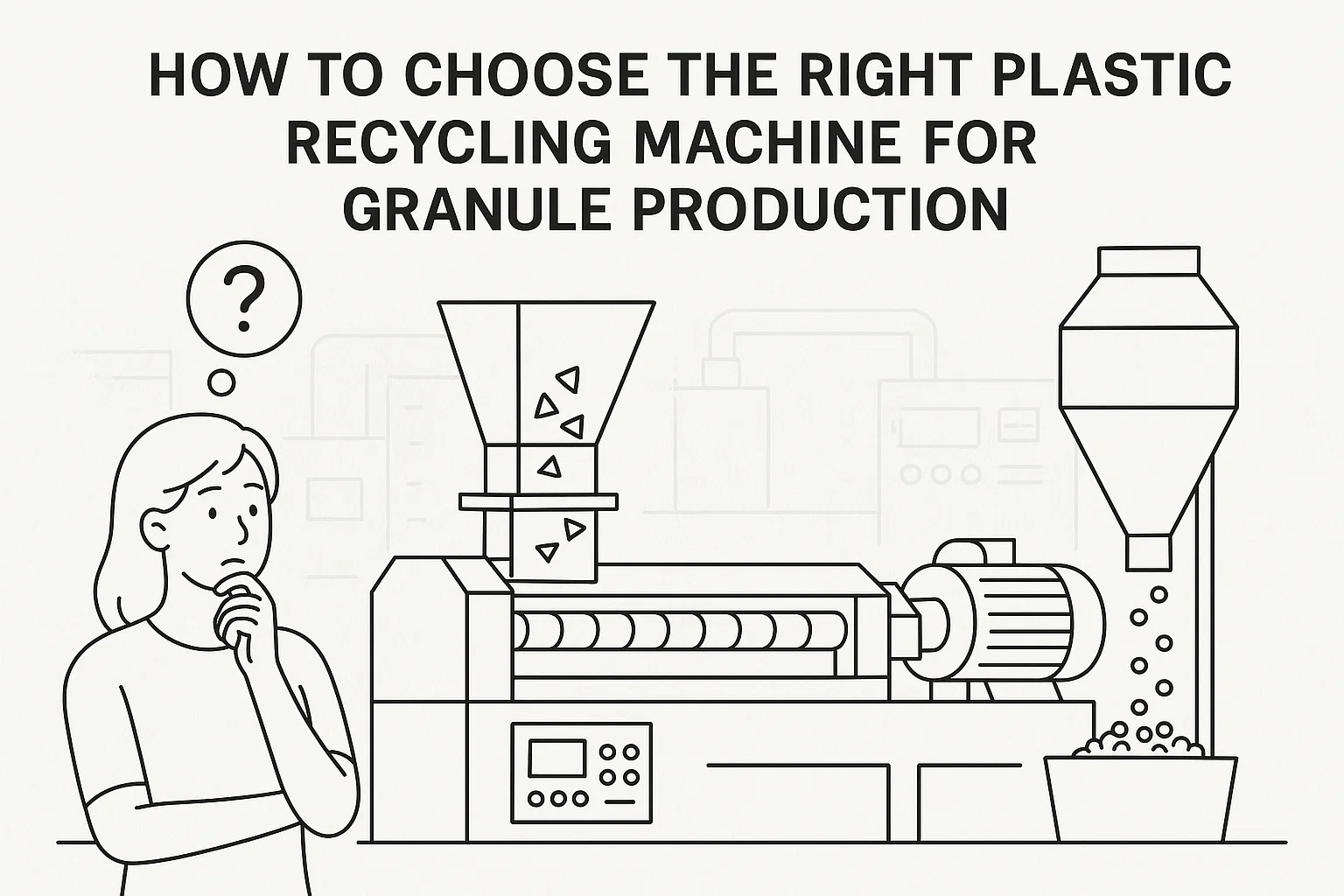
Recycled plastic granules are a crucial resource across a wide range of industries, including packaging, textiles, construction, and automotive manufacturing. As the demand for recycled plastics grows, producing high-quality granules has become essential—not just for sustainability, but for staying competitive in the global market. The secret? It all starts with choosing the right recycling machinery.
Whether you’re launching a new recycling facility or upgrading your current operations, the right equipment will drive your efficiency, reduce costs, and ensure consistent product quality. Here’s a comprehensive guide to help you make the best decision.
1. Analyze Your Raw Material
Before selecting any machine, it’s important to understand the types of plastic waste you’ll be processing:
- PET Bottles: Best suited for rPET granules used in textiles and food-grade packaging.
- HDPE & LDPE (Bottles, Films, Bags): Require thorough washing and cutting before extrusion.
- PP Plastics (Containers, Caps, Automotive Parts): Can be granulated directly with robust shredders and extruders.
- Mixed Plastics: Demand advanced sorting systems and multi-stage extruders for optimal results.
Tip: Matching your machinery to your specific plastic type is key to achieving high output quality and minimizing operating costs.
2. Essential Machines for Plastic Granule Production
A modern plastic granule production line consists of several key machines. Each plays a vital role in transforming waste into uniform, high-quality granules:
Shredders & Crushers
- Break down plastic waste into small flakes.
- Ensure consistent feeding into extruders.
- Opt for high-torque models if processing thick or tough plastics.
Washing & Drying Systems
- Remove labels, dirt, and contaminants.
- Hot washing is essential for food-grade recycling.
- Centrifugal dryers or dehumidifiers reduce moisture before extrusion.
Extruders (Single-Screw or Twin-Screw)
- The heart of the granulation process.
- Single-screw extruders: Ideal for clean, homogenous waste streams.
- Twin-screw extruders: Best for mixed plastics, blending additives, and producing higher-quality granules.
Pelletizers (Strand, Underwater, or Die-Face Cutting)
- Convert molten plastic into uniform granules.
- Choose the pelletizing method based on desired granule size and production scale.
Filtration Systems
- Remove impurities during extrusion.
- Consider automatic screen changers for uninterrupted production.
Storage & Packing Systems
- Protect granules from moisture and contamination.
- Automated packing is ideal for large-scale or export operations.
3. Key Factors to Consider When Choosing a Machine
Selecting the right machinery involves more than just matching machine type to plastic:
- Production Capacity: Ranges from small-scale (100–500 kg/hr) to industrial (1–2 tons/hr) lines.
- Energy Efficiency: Modern extruders with optimized heating can lower energy consumption by up to 20%.
- Automation Level: Fully automated lines minimize labor costs but require higher initial investment.
- End-Use Requirements: Food-grade packaging requires FDA or EU-approved machinery and high-precision filtration.
- Maintenance & After-Sales Support: Reliable suppliers offer spare parts, training, and ongoing technical service.
4. Recommended Machine Setups by Business Size
To simplify your selection, here are common setups based on production needs:
Small Businesses / Startups
- Compact single-screw extruder
- Strand pelletizer Affordable, easy to operate, and perfect for limited space.
Medium-Scale Recycling Plants
- Full line: shredder, hot washing unit, twin-screw extruder, die-face pelletizer Offers flexibility and increased capacity for growing businesses.
Large-Scale Industrial Production
- Fully automated washing and drying
- High-capacity twin-screw extruders
- Underwater pelletizers Delivers top quality, volume, and operational efficiency for industrial leaders.
The Bottom Line: Invest Wisely for Growth
Choosing the right machine for producing recycled plastic granules means aligning technology with your raw material, business goals, and quality standards. With global demand for recycled plastics projected to grow by over 7% annually through 2030, the right equipment can place your company at the forefront of the circular economy.
Frequently Asked Questions (FAQ)
1. What machine is used to make recycled plastic granules?
Recycled plastic granules are produced with shredders, washing lines, extruders, and pelletizers that convert plastic waste into uniform pellets.
2. What is the difference between single-screw and twin-screw extruders?
Single-screw extruders are best for clean, uniform waste streams, while twin-screw extruders handle mixed plastics and enable superior mixing for high-quality granules.
3. Can recycled granules be food-grade?
Yes, if processed with FDA or EU-approved recycling lines that include hot washing and decontamination, food-grade granules are achievable.
4. How much does a plastic granule making machine cost?
Small extruders start around $15,000–$40,000, while larger, industrial lines can exceed $200,000.
5. How do I prevent moisture in recycled granules?
Use centrifugal or dehumidifying dryers to maintain low moisture levels before extrusion.
6. What industries use recycled plastic granules?
Packaging, textiles, construction, automotive parts, and consumer goods manufacturers are among the top users of recycled plastic granules.
Ready to invest in your recycling future? Contact our team for expert advice on the best machinery for your needs and take your plastic recycling business to the next level!