Zig-Zag Air Classifier
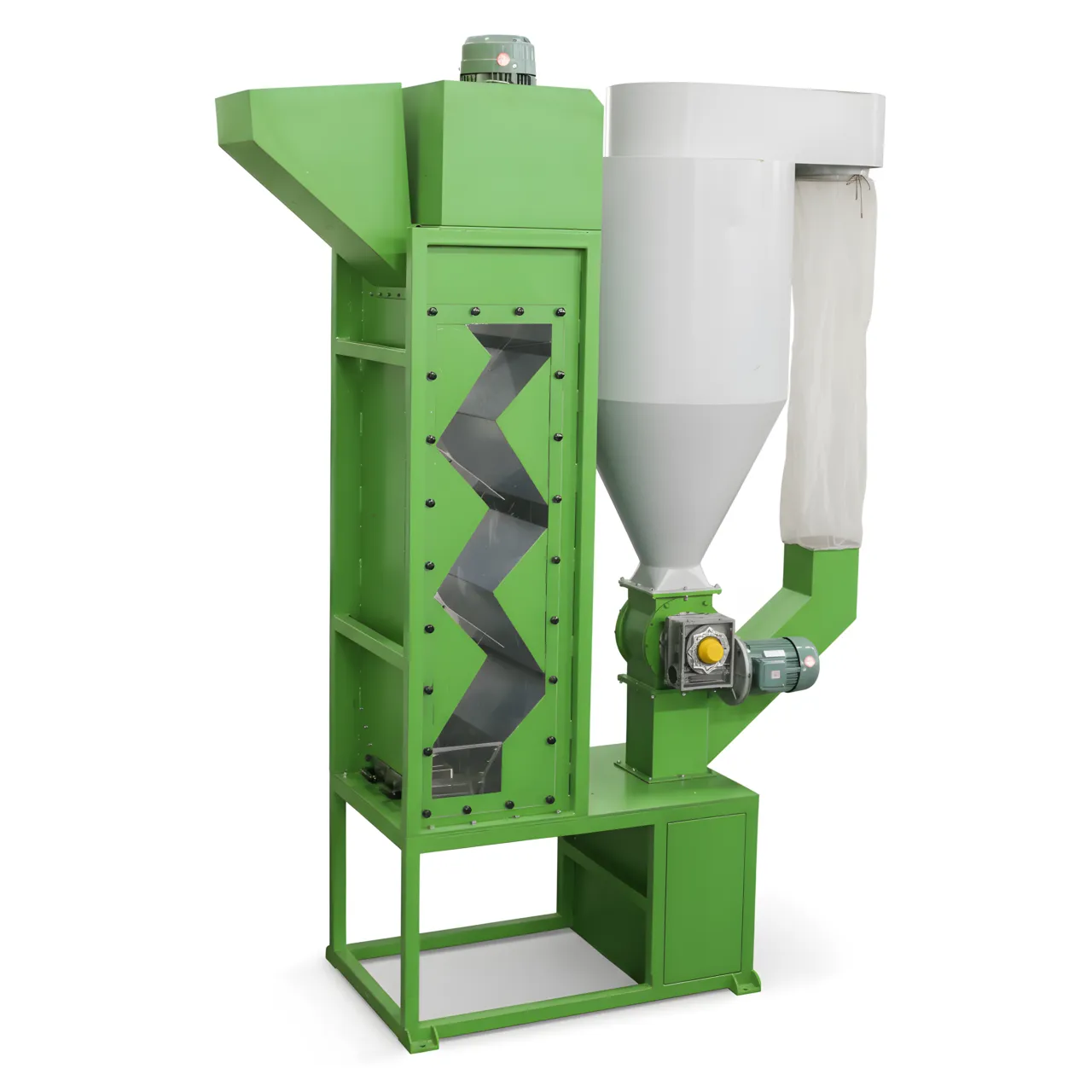
The final, crucial step to achieving a perfectly clean plastic flake. Our Zig-Zag Air Classifier uses a column of air to effectively separate light contaminants like paper labels, film fragments, and dust from your valuable PET or HDPE flake stream. This simple, low-maintenance solution significantly boosts the purity and market value of your final product.
描述
Achieve Ultimate Purity by Removing Labels & Fines
Our Zig-Zag Air Classifier is the simple, effective solution for separating light contaminants like paper, film, and dust from your valuable plastic flake stream. Elevate the quality of your final product and ensure a cleaner, more profitable output.
The Smart Solution for Cleaner Material
Effective Separation
Stands as a guardian against contaminants, effectively separating lightweight impurities from heavier plastics to ensure a clean material stream.
Partial Drying Action
Beyond separation, the constant column of air provides a partial drying effect, enhancing the material’s readiness for the next stage of recycling.
Simple & Space-Efficient
The simple, vertical design has a small footprint, fitting easily into existing recycling lines while delivering optimal separation results with low maintenance.
The Zig-Zag Principle: How It Works
1. Material Infeed
A mixed stream of heavy plastic flakes and light contaminants (labels, film, dust) is fed into the top of the Zig-Zag chamber.
2. Air Column Separation
A powerful, upward-flowing column of air is introduced from the bottom. As the material cascades down through the zig-zagging path, it encounters the rising air multiple times.
3. Dual Exits
The light contaminants are carried upward by the air and exit through the top into a cyclone separator. The heavy, clean plastic flakes are unaffected and fall through the bottom exit.
Applications & Technical Specifications
Ideal Applications
- PET Bottle Recycling: The primary application for removing paper and plastic label fragments from washed PET flakes. This is a crucial final cleaning step.
- Rigid Plastic Recycling: Separating fines and dust from granulated HDPE, PP, or other rigid plastic streams.
- E-Waste Processing: Removing light paper and plastic components from shredded electronic waste.
- General Material Separation: Any application requiring the separation of light, flaky materials from a heavier granular product.
Technical Specifications
| Blower Motor Power | 5.5 kW |
| Rotary Valve Motor Power | 1.5 kW |
| Rotary Valve Diameter | ⌀270mm |
| Rotary Valve Speed | 50 RPM |
| Cyclone Separator Volume | 600 L |
Add the Finishing Touch to Your Recycling Line
Contact us today to get the latest prices, lead times, and to learn how our Zig-Zag Air Classifier can elevate the quality and value of your final product.
Frequently Asked Questions
Where in the recycling line is the Zig-Zag Air Classifier typically placed?
It is almost always placed at the very end of the washing and drying line, right before the material is sent to a bagging station or silo. It serves as the final “polishing” step to remove any remaining light contaminants that survived the washing process.
How do you control the separation? Can it be adjusted?
Yes, the separation is highly adjustable. The primary control is an air damper on the blower, which allows you to increase or decrease the airflow. By fine-tuning the air speed, you can precisely control what is light enough to be lifted away and what is heavy enough to fall through, optimizing the purity of your final product.
What is the function of the cyclone separator and rotary valve?
The Cyclone Separator is connected to the top exit. Its job is to slow down the air and allow the light contaminants (paper, film, dust) to drop out of the airstream and be collected. The Rotary Valve at the bottom of the cyclone provides an air-tight seal while continuously discharging the collected contaminants, preventing air from escaping the system.
Can this machine handle wet material?
For best results, the material should be mostly dry. While the machine does have a partial drying effect, its primary function is separation by weight and aerodynamics. If the material is too wet, light contaminants can stick to the heavier plastic flakes, significantly reducing separation efficiency. It should be placed after the main drying equipment.