
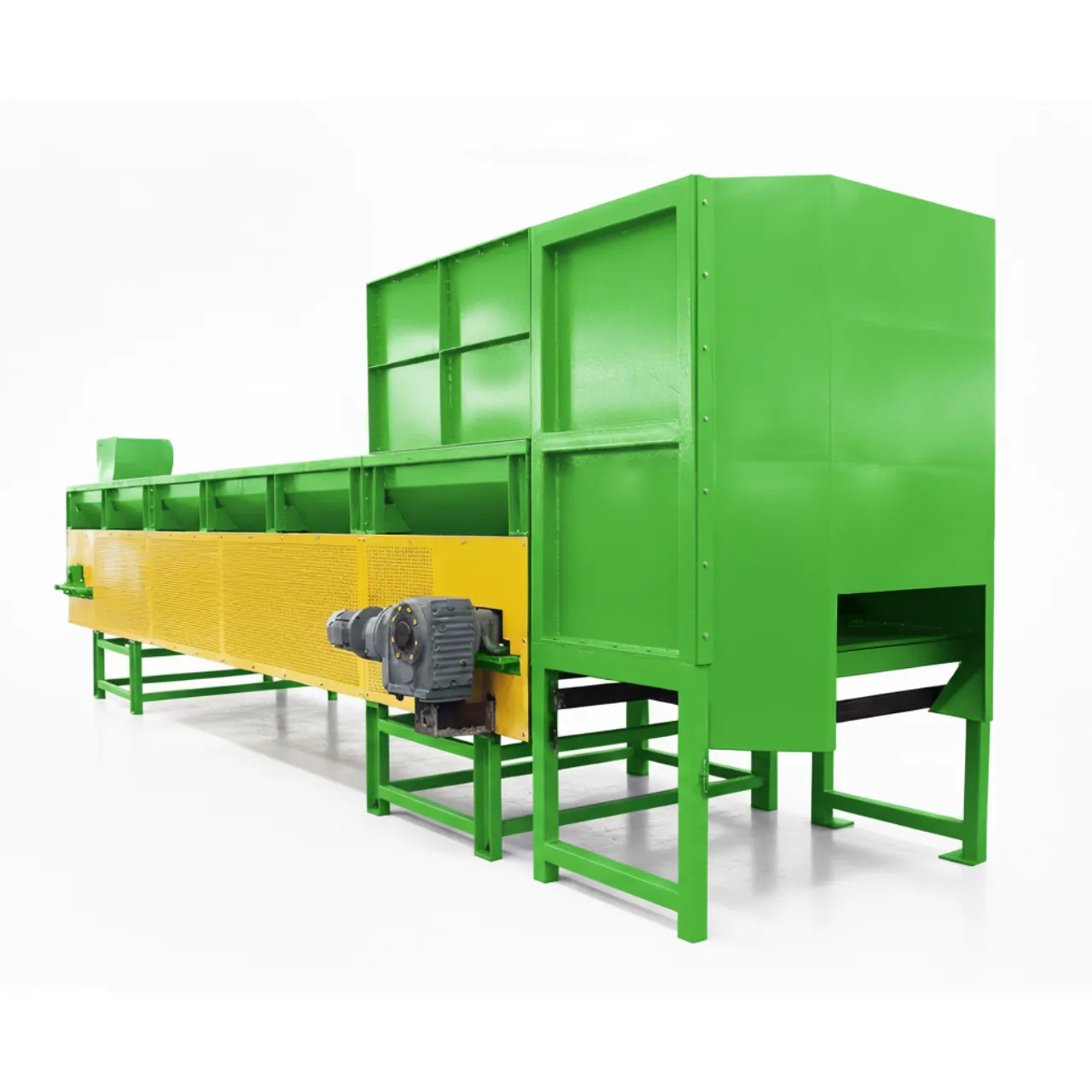
Automatic Horizontal Plastic Debaling Machine
Rumtoo’s automatic horizontal debaling machine opens compressed plastic bales into clean, free-flowing material so your sorting, washing, and pelletizing lines stay loaded without manual cutting or unsafe improvised methods.
- Automated opening of densely packed bales
- High throughput with continuous belt feeding
- Horizontal enclosed chamber and safety interlocks
From Compressed Bales to Free-Flowing Feedstock
The automatic horizontal debaler replaces slow, manual bale opening with a controlled, enclosed process. Bottles, rigid containers, or mixed plastics enter as compacted bales and leave as evenly loosened material ready for sorting and washing.
- Processes tightly packed PET, HDPE, and mixed plastic bales without manual cutting.
- Handles multiple bales in queue so downstream equipment stays continuously fed.
- Reduces labor, ergonomic risk, and bale-wire hazards around the line.
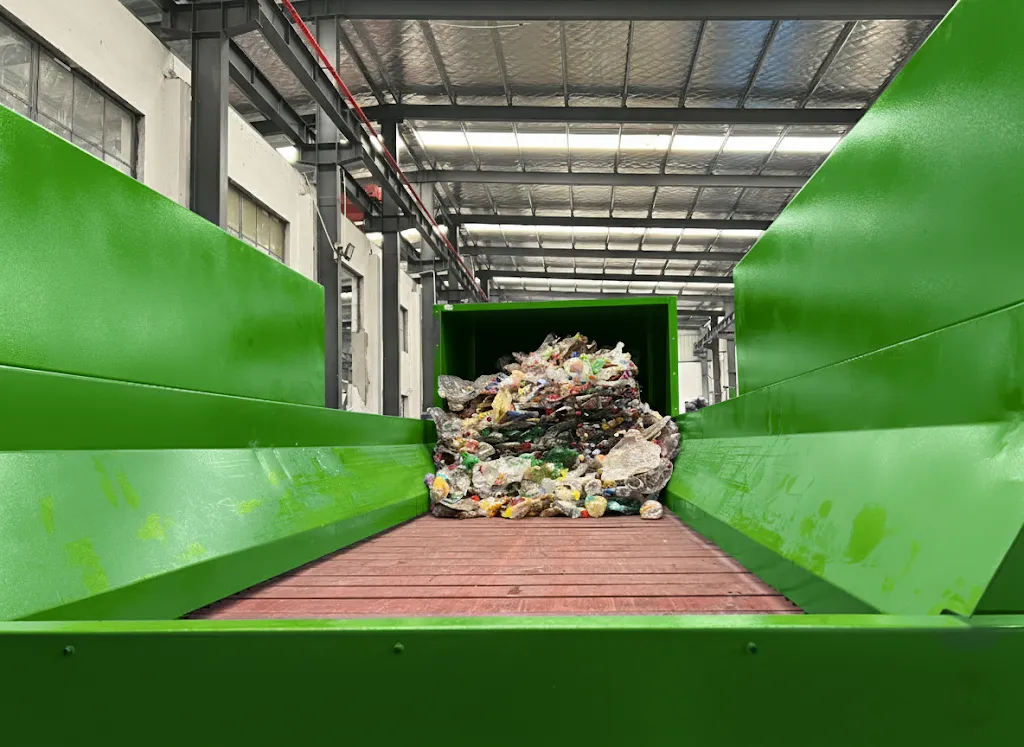
Horizontal twin-rotor chamber with guarded infeed and outfeed keeps bale opening controlled and easy to observe.
Key Benefits
Automating bale opening closes the gap between inbound logistics and high-efficiency washing or pelletizing lines.
Less Manual Work
Feed up to several bales in sequence and let the machine do the heavy work, freeing operators from cutting, prying, and re-stacking by hand.
Stable Downstream Flow
Counter-rotating rotors and a controlled discharge create fluffy, consistent material that flows smoothly into sorting, washing, or shredding equipment.
Safer Bale Handling
Horizontal design, guards, and emergency stops keep people away from bale recoil, falling material, and exposed cutting tools.
How the Debaling Machine Works
A simple three-step process turns dense bales into ready-to-process plastic with minimal supervision.
Bales are placed on the infeed conveyor, which indexes each unit into the vertical chamber. Operators can queue multiple bales to keep the line running.
Inside the chamber, two rotors spinning in opposite directions pull, tear, and lift the bale layers apart, breaking the compacted block into loose pieces.
The loosened material falls onto an outfeed conveyor and moves directly toward sorting, washing, or shredding, with throughput controlled by the PLC.
Watch the Debaler in Operation
See how the horizontal debaling machine opens dense bottle bales into a consistent material curtain for downstream recycling equipment.
From Manual Debaling Pain to Predictable Flow
Many recycling plants still rely on knives, hooks, or ad-hoc loaders to break bales. The result is slow, inconsistent, and risky.
- Operators spend too much time cutting and pulling bales apart, especially with high-density PET or HDPE.
- Irregular bale opening leads to surges and starvation at the sorting, washing, or shredding stage.
- Loose bale wires and falling material create safety hazards around the infeed area.
How Rumtoo’s Debaler Helps
- Automates bale breaking in an enclosed chamber, reducing manual interaction with tight bales.
- Produces a steady, metered flow of material so downstream lines operate at a more constant load.
- Integrates PLC safety logic, interlocks, and emergency stops to protect people and equipment.
Construction Highlights
The automatic horizontal debaler is engineered for demanding recycling environments where uptime, safety, and predictable output matter.
- Horizontal Twin-Rotor Chamber: Counter-rotating rotors pull bales apart along the bale length for controlled opening.
- Heavy-Duty Hydraulics: Hydraulic cylinders manage bale compression and rotor loading for different bale densities.
- PLC-Based Control: Central PLC coordinates conveyor indexing, chamber loading, and rotor operation with clear HMI feedback.
- Guarding & Interlocks: Access doors, safety switches, and emergency stops help keep operators protected.
- Robust Structure: Reinforced frame and wear-resistant rotor tools handle continuous, multi-shift operation.
- Maintenance-Friendly Layout: Service doors and accessible bearings simplify inspection and routine upkeep.
Key Technical Parameters
Representative parameters for a typical automatic horizontal plastic debaling machine. Other power packages and sizes are available on request.
| Specification | Value (Reference) |
|---|---|
| Main motor power | 7.5 kW × 2 |
| Feeder dimensions | 1550 mm × 1850 mm |
All parameters above are for reference only. Rumtoo can customize hopper size, motor power, hydraulics, and conveying options to match your throughput and bale types.
Typical Applications
Place the automatic horizontal debaler at the front of your plastics recycling line to eliminate manual bottlenecks.
PET & HDPE Bottle Bales
Open post-consumer bottle bales before label removal, sorting, and hot-wash systems to stabilize your washing line input.
Mixed Rigid Plastics
Loosen bales containing crates, trays, and other rigid packaging for easier separation and shredding.
Distribution & Packaging Returns
Debale compacted packaging waste for reprocessing instead of sending residuals straight to landfill or incineration.
Operation & Maintenance Roadmap
Use these checklists as a starting point for safe, reliable operation of the debaling machine.
Pre-Start Checklist
- Inspect the infeed area for stray wires, straps, or tools.
- Verify guards, doors, and interlocks are closed and functioning.
- Confirm hydraulic oil level, pressure, and absence of visible leaks.
- Check the conveyor belt and rotor area for jammed material.
- Run the machine briefly without load to listen for abnormal noise or vibration.
Operating Guidelines
- Position bales squarely on the infeed conveyor and respect the rated bale weight.
- Follow the HMI prompts for automatic mode; avoid bypassing safety devices.
- Use hooks or tools, not hands, when adjusting partially opened bales.
- Coordinate infeed rate with downstream sorting or washing capacity to prevent overloading.
- Stop the machine and lock out power before clearing any suspected jam.
Maintenance & Care
- Follow a regular lubrication schedule for bearings, chains, and hydraulic components.
- Inspect rotor tools and wear parts; replace or rotate as they become dull.
- Check fasteners on guards, rotors, and frame for loosening due to vibration.
- Have qualified technicians diagnose any PLC alarms or hydraulic faults before restarting.
Why Choose Rumtoo’s Automatic Debaler
Compared with manual debaling or basic breaker conveyors, the horizontal machine offers safer, more consistent bale opening.
| Aspect | Rumtoo Automatic Horizontal Debaler | Manual / Basic Solutions |
|---|---|---|
| Throughput | Continuous, PLC-controlled operation matched to downstream capacity. | Stop-and-go work; output depends heavily on manpower and shift conditions. |
| Safety | Enclosed chamber, guards, interlocks, and emergency stops. | Open working area with exposed knives, wires, and falling material. |
| Consistency of output | Uniformly loosened material for predictable feeding. | Variable flake size and density, causing surges in the line. |
| Labor demand | One operator can supervise multiple bales and the HMI. | Multiple workers required for cutting, pulling, and repositioning bales. |
| Integration | Designed to align with conveyors, sorting, and washing equipment. | Often disconnected from the rest of the process, limiting automation. |
What Operators Say
Plants installing Rumtoo’s automatic debaler report faster startup and fewer stoppages around the bale infeed zone.
“We used to dedicate three people to opening bottle bales. With the horizontal debaler, one operator can keep the whole washing line supplied.”
“The output is much more even, which makes it easier to keep our optical sorters and sink-float tanks running at target throughput.”
“Safety incidents around bale handling dropped after we enclosed the debaling step and standardized the procedure.”
Frequently Asked Questions
What bale types can the debaler handle?
The horizontal debaler is suitable for PET and HDPE bottle bales, mixed rigid plastic bales, and similar compaction formats within the rated bale dimensions and weight. Share photos and density information with Rumtoo engineers for confirmation.
Do we need to remove bale wires or straps first?
In most layouts, wires and straps are cut and removed at the infeed station before the bale enters the chamber. Rumtoo can advise on safe wire-handling procedures and optional accessories.
How many bales per hour can it process?
Capacity depends on bale size, density, and downstream line speed, but the automatic debaler is designed to keep modern sorting and washing lines continuously supplied. Rumtoo can size motor power and hydraulics to your target throughput.
Can it be integrated into an existing line?
Yes. The debaler can be paired with existing conveyors, sorting systems, and washing lines. Rumtoo can provide layout suggestions, elevation drawings, and connection points for your current plant.
What level of maintenance is required?
Routine maintenance focuses on lubrication, inspection of rotor tools and wear plates, tightening of structural fasteners, and periodic checks of hydraulic components. The PLC stores alarm history to help technicians diagnose issues quickly.
Configure Your Debaling Module
Share your bale types, target throughput, and existing line layout. Rumtoo engineers will recommend the optimal debaler configuration, rotor power, and conveying interfaces.
- 24/7 technical hotline and remote commissioning support
-
Connect the whole recycling lineUpstream baled collection & storage → Rumtoo automatic debaling machine → downstream washing, sorting, shredding, and pelletizing.
- Global support for hydraulics, drives, sensors, and wear parts