
Desktop & R&D Units
Desktop Plastic Shredder for Small-Batch Regrind – Labs & Makerspaces
Built for labs, makerspaces, and pilot recycling lines. It turns 3D printing scrap and rigid plastic into consistent regrind for extrusion tests.
- Throughput: up to 5 kg/h
- Particle size: typically 3-6 mm
- Materials: PLA, PETG, ABS, PP/HDPE caps
- Power: 110V/220V
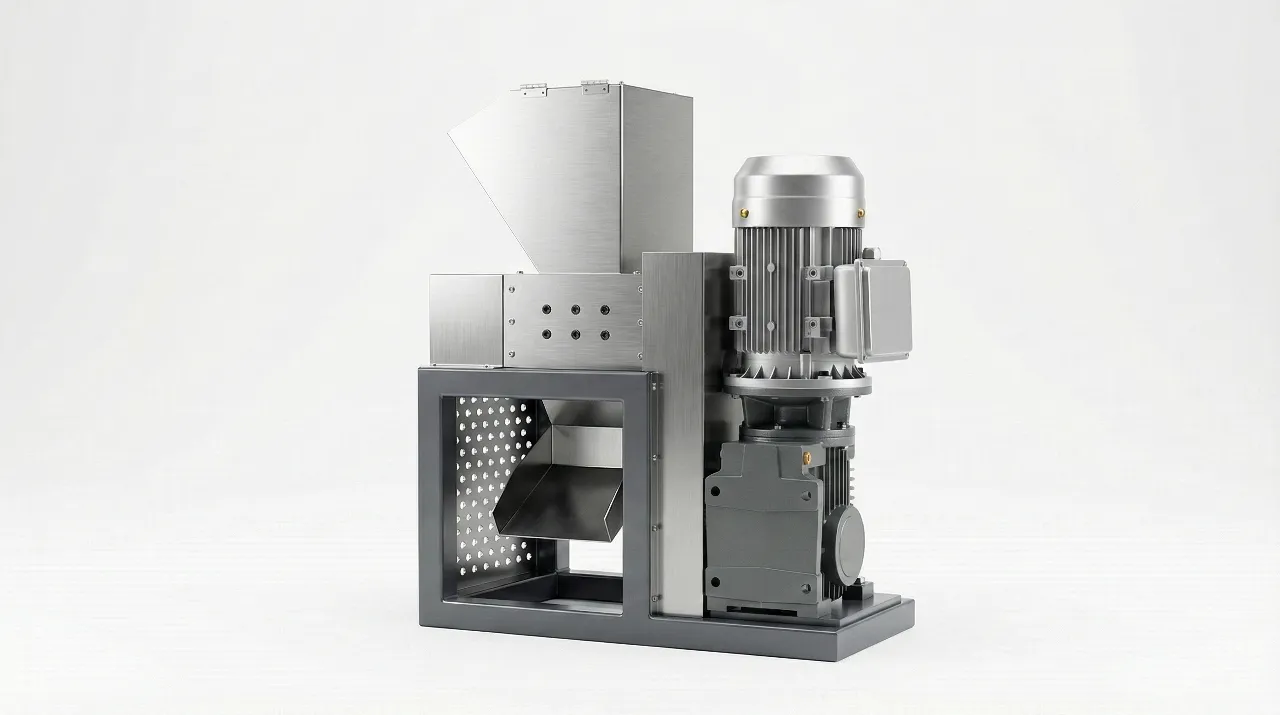
How It Works
A compact cutting workflow for repeatable sample preparation and regrind collection.
Material Preparation
Sort by polymer, remove obvious contaminants, and cut pieces to fit the 120 x 200 mm feed opening.
Knife-Based Shredding
Geared 1.5 kW drive and dual knife sets reduce material to controlled regrind size.
Forward / Reverse Clearing
Reverse mode helps clear occasional bridging without opening the cutting chamber.
Regrind Collection
Output is collected and routed to storage, drying, or small extruder feeding workflows.
Key Benefits
Compact Footprint
Fits small workshops, laboratories, and pilot lines where floor space is limited.
Controlled Regrind Output
Typical 3-6 mm output range supports downstream handling and lab-scale process consistency.
Flexible Voltage Options
Configurable 110V/220V electrical setup for different regional use cases.
Problem-Solution Fit
Small labs and makerspaces need reliable plastic size reduction but have no room or budget for industrial shredders.
True desktop footprint (fits on standard lab bench) delivers industrial-grade shredding with only 110/220V power and <1 m² space.
Irregular 3D print scrap shapes frequently jam compact cutting chambers.
Forward/reverse jog control + wide 180 mm throat allows instant jam clearing in <30 seconds, no tools required.
Inconsistent regrind particle size ruins lab extrusion trials and material validation data.
Precision knife geometry + adjustable feed rate produces uniform 4–8 mm regrind, ensuring repeatable trial results every time.
Mixed contamination and soft materials accelerate knife wear and reduce uptime in daily use.
H13 tool steel knives + defined feed preparation extend service intervals to 300+ hours in controlled lab environments.
Video Demonstration
Quick view of feeding, cutting, and output behavior under small-batch operation.
Applications
3D Printing Scrap Processing
PLA, PETG, ABS failed prints and offcuts for pilot recycling workflows.
Bottle Cap and Rigid Sample Regrind
HDPE/PP cap streams and rigid sample preparation for material validation.
Educational and Training Labs
Hands-on learning for material circularity and recycling process understanding.
Filament Feed Preparation
Pre-size regrind for small extrusion or filament-making trials.
Small-Batch Product Development
Rapid test cycles for regrind behavior before scale-up decisions.
Pilot Waste Sorting Programs
Early-stage reduction and handling validation for new plastic recovery projects.
Technical Specifications
| Parameter | Specification | Notes |
|---|---|---|
| Feeding Port | 120 x 200 mm | Confirm max input piece size |
| Target Output | 3-6 mm | Material dependent |
| Typical Throughput | 1-5 kg/h | Depends on polymer and feed prep |
| Blade Set A | 22 rotating + 22 fixed, 5 mm | General purpose cutting |
| Blade Set B | 36 rotating + 36 fixed, 3 mm | Finer output preference |
| Blade Material | H13 industrial steel | Wear depends on contamination |
| Motor Power | 1.5 kW with gearbox | Forward/reverse supported |
| Voltage | Customizable 110V / 220V | Specify region when ordering |
| Machine Weight | 101 kg | Excluding packaging |
| Overall Size | 650 x 300 x 780 mm | L x W x H |
Specifications are reference values. Final setup depends on material type and trial objective.
Why Choose This Mini Desktop Shredder
| Criteria | Typical Hobby/Entry-Level Cutters | Rumtoo Mini Desktop Small Shredder |
|---|---|---|
| Cutting Stability | Prone to vibration and inconsistent particle size | Precision geared drive + fixed knife geometry for uniform 4-8 mm regrind |
| Operational Control | Limited jam recovery; manual intervention required | Forward/Reverse jog control + quick-clear access for <30s jam recovery |
| Material Adaptability | Narrow feed range; mainly soft filament | Handles rigid PLA/ABS/PETG/PC scrap and pre-shredded lab feedstock |
| Scale-Up Readiness | Poor data transferability to production equipment | Generates repeatable trial data directly transferable to pilot & industrial lines |
| Noise & Lab Compatibility | Often >75 dB, unsuitable for shared lab space | <55 dB quiet operation + standard 110/220V plug-and-play |
Frequently Asked Questions
What materials are suitable for this mini desktop shredder?
Common inputs include 3D print scrap (PLA/PETG/ABS), bottle caps, and prepared PET pieces. Input should be clean, dry, and free of metal contamination.
What output size can I expect?
Typical output is around 3-6 mm depending on material behavior, knife set, and feeding consistency.
Can it run on 110V power?
Yes. Voltage can be customized for 110V or 220V. Please confirm your country and electrical standard when ordering.
Is it suitable for direct filament extrusion feeding?
It can prepare regrind for filament workflows, but drying and optional screening may still be required depending on your extruder requirements.
Need a Mini Shredder for Your Lab or Pilot Workflow?
Send your material type, target output size, and throughput expectations for a recommended configuration.
Go to Contact Form