
Disc Pulverizer Systems

Plastic Pulverizer Machines for PVC, PE, and Rotomolding Powder

Direct-drive disc pulverizer with bearing temperature protection and CE-certified safety systems. Turn pre-crushed plastic granules into flow-stable powder (20-120 mesh) for rotomolding, compounding, and recycling reuse. Free trial grinding available.

Scroll
Plastic pulverizer machine

Why Disc Milling — Not Just Granulation

A granulator chops plastic into 3-10 mm flakes. A disc pulverizer takes those flakes and grinds them into fine, flour-like powder (20-120 mesh) that rotomolding, compounding, and masterbatch processes actually need.

1

Metered Feed via Vibrating Feeder

Pre-crushed granules (typically 6-8 mm) enter through a vibratory feeder that controls load rate and residence time, preventing overload and ensuring consistent disc loading.

2

Direct-Drive Disc Grinding (2800-3500 RPM)

Material passes between a stationary disc and a direct-drive high-speed rotating disc with application-specific serration profiles. Centrifugal force drives material outward through a micrometer-adjustable gap (0.2-0.5 mm) where shear and attrition produce the target powder fineness. Bearing temperature is continuously monitored with automatic shutoff protection.

3

Automatic Temperature Control + Pneumatic Transfer

Integrated water jacket and air cooling keep the grinding chamber below critical thresholds (PVC degrades above ~160 °C, PE/PP softens and smears). Powder is pneumatically conveyed to cyclone separator and collection.

4

Vibrating Screen + Closed-Loop Regrind

A vibrating sieve classifies final output by mesh target; oversize particles return automatically for regrind, improving first-pass yield and tightening particle size distribution.

Why Rumtoo Disc Pulverizers

Direct Drive — No Belt Wear

Motor-to-disc direct coupling eliminates belt slippage, tension loss, and replacement downtime. Delivers consistent disc speed (2800-3500 RPM) with higher energy transfer efficiency and lower long-term maintenance cost compared to belt-driven systems.

Bearing Temperature Protection with Auto Shutoff

Embedded PT100 sensors continuously monitor bearing temperature. When readings exceed the preset threshold, the system triggers automatic shutdown to prevent bearing seizure, spindle damage, and unplanned downtime — protecting both operator safety and machine longevity.

Segment Disc Design — Individually Replaceable

Grinding discs use a modular segment design: each toothed segment can be individually removed and replaced without dismounting the entire disc assembly. Different serration profiles are available for different materials (coarse teeth for PE, fine teeth for rigid PVC). Each segment supports 3-5 resharpening cycles before replacement, reducing long-term consumable cost.

Tighter Particle Size Distribution

Micrometer-grade disc gap adjustment (0.2-0.5 mm) with mechanical locking ensures repeatable precision. Combined with a closed vibrating screen loop, this tightens PSD for rotomolding (35-60 mesh class), compounding, and precision dosing applications.

Automatic Temperature Control

Integrated water jacket cooling and forced-air system with automatic thermal monitoring keep grinding temperature well below polymer degradation thresholds — critical for PVC (>160 °C) and heat-sensitive PE/PP blends.

CE-Certified Safety Systems

Full CE and ISO 9001 compliance. Includes overload protection with motor current monitoring and auto-stop, safety interlocks on access doors (opening any panel halts the drive), emergency stop buttons on all operator stations, and bearing over-temperature protection. Designed for European and international safety standards.

D2/SKD11 Disc Blades for Longer Life

Grinding disc segments use D2 or SKD11 tool steel with cryogenic heat treatment, providing a practical balance of hardness and toughness. Typical sharpening interval is 300-500 operating hours, with 3-5 resharpening cycles per segment.

Continuous Line Integration

Ready for upstream granulation and downstream pneumatic conveying, cyclone separation, storage, and dosing modules in 24/7 recycling or production lines.

Common Pulverizing Issues and Fixes

Problem

Powder particle size is too broad — rotomolding parts have uneven wall thickness or compounding dosing is unstable.

Rumtoo Solution

Disc gap tuning (use feeler gauge for 0.2-0.5 mm precision) plus calibrated vibrating screen narrows PSD and reduces off-spec recirculation load.

Problem

PVC or PE material softens, smears, or sticks in the grinding chamber during long continuous runs.

Rumtoo Solution

Automatic temperature control with water jacket + forced-air keeps the chamber below critical polymer thresholds. Monitor amp draw — a 15% increase often signals thermal overload before visible sticking occurs.

Problem

Energy cost per kilogram rises sharply at finer mesh targets (below 80 mesh).

Rumtoo Solution

Match disc diameter and motor power to the target mesh upfront. Optimize airflow volume and recirculation ratio to avoid over-grinding, which wastes energy without improving quality.

Problem

Fine powder dust affects operator safety, housekeeping, and line uptime.

Rumtoo Solution

Closed pneumatic conveying from mill to cyclone to collection bag reduces airborne fines. Dedicated dust collection architecture keeps the shop cleaner and reduces maintenance burden.

Equipment and Material Reference

Visual reference for input feed condition and final powder quality after disc pulverizing.

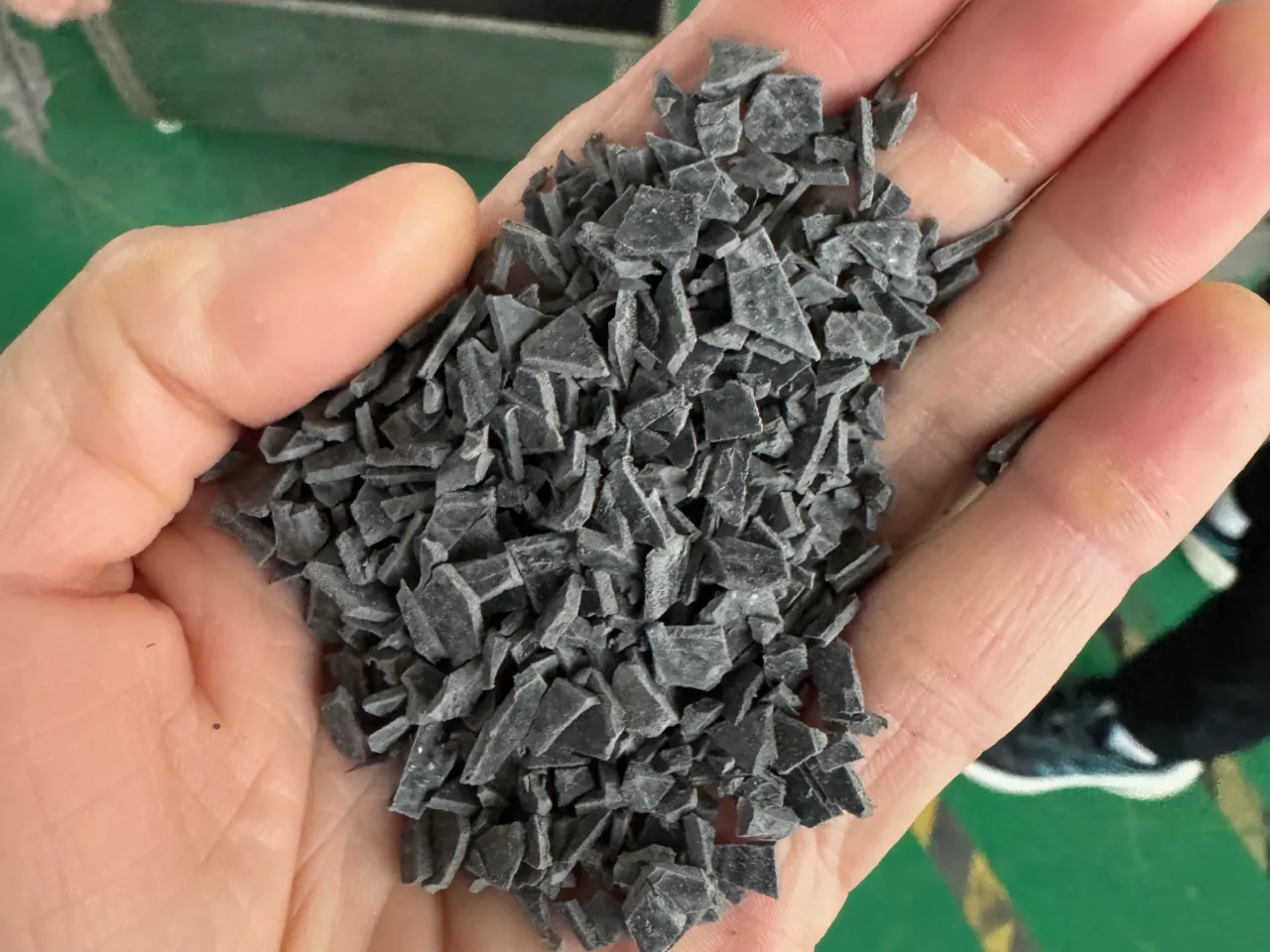
PVC rubber debris material

PVC Feedstock Reference

This reference image shows the prepared rigid PVC feed condition before fine milling, useful for evaluating pre-crush size and consistency.

  • Helps confirm feed is pre-sized for stable pulverizer loading
  • Useful for checking flake thickness and shape consistency
  • Supports upstream crusher and feeder matching before RFQ
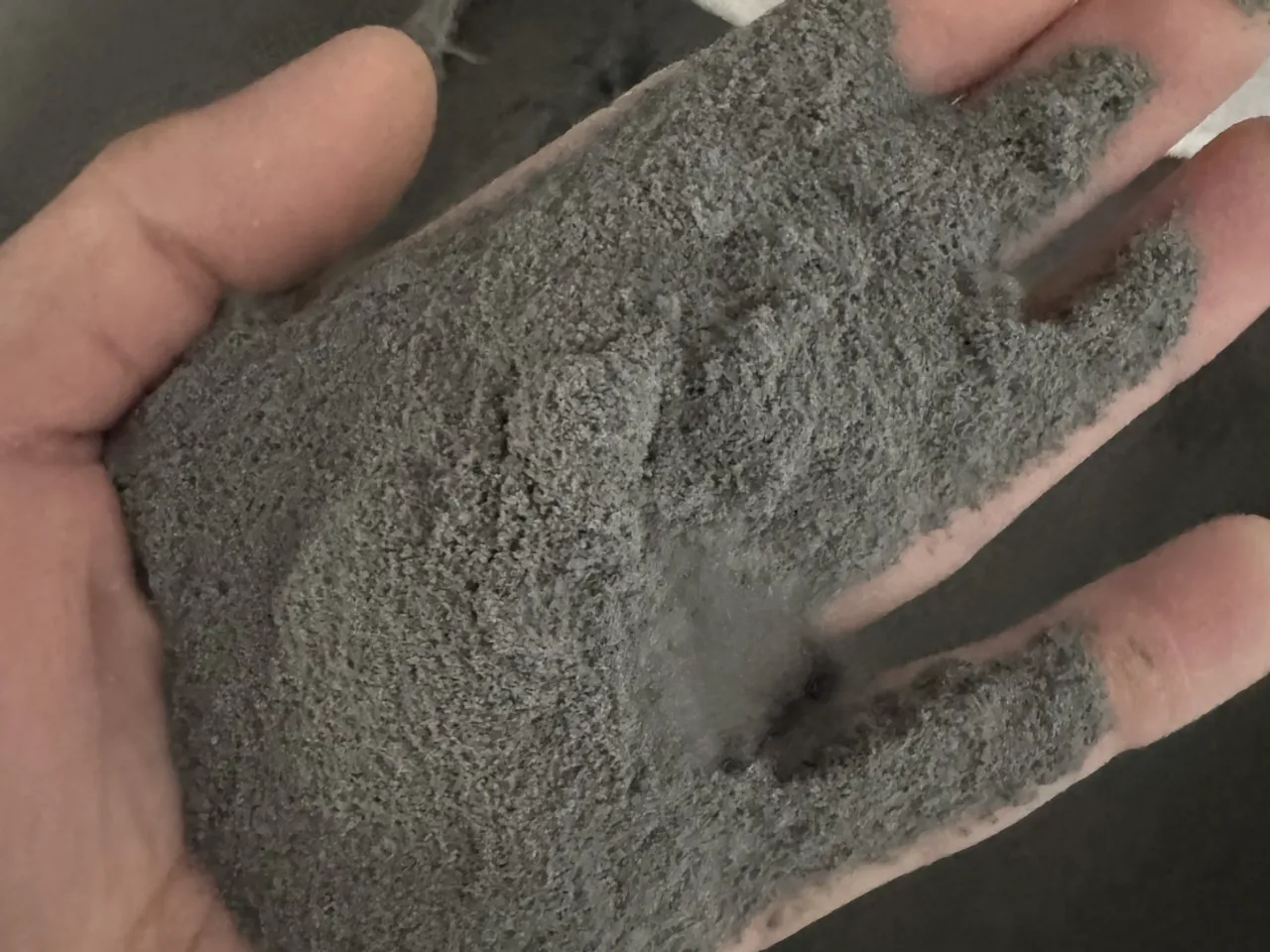
PVC 60-Mesh Powder — 320 kg/h Verified Output

Final PVC powder produced on Rumtoo RMP-500 at 60-mesh target and sustained 320 kg/h throughput. Grinding chamber temperature held at 45 °C under continuous 8-hour operation.

  • PSD within ±5% of 60-mesh target specification
  • Stable 320 kg/h throughput with automatic temperature control at 45 °C
  • Suitable for pipe extrusion blending, profile rework, and direct reuse
PVC rubber powder material

Pulverizer Video Demonstration

Short operating view of the pulverizer system in production use.

Typical Application Scenarios

  • Rotomolding Feed Powder

    LLDPE/MDPE/HDPE powder preparation targeting 35-60 mesh class (250-500 microns) with stable flow and fusion behavior for uniform wall thickness.

  • PVC Pipe and Profile Rework

    Convert rigid PVC scrap into fine reusable powder for extrusion blending, requiring careful temperature control to stay below ~160 °C degradation threshold.

  • PE/PP Compounding and Masterbatch

    Prepare fine powder (60-100 mesh) for additive dispersion, color matching, specialty formulation, and selected masterbatch production processes.

  • WPC and Mineral-Filled Systems

    Powder preparation for wood-plastic composite and filled formulations where feed particle uniformity directly affects extruder stability and final product quality.

  • Engineering Plastics (PC, ABS, PA)

    Pilot and pre-production milling for brittle or semi-rigid engineering plastics after material test validation. Often requires cryogenic pre-cooling for softer grades.

  • Line Retrofit Modules

    Add a powder-prep stage to existing recycling lines where downstream process (coating, fluidized bed, electrostatic application) needs tighter particle control.

  • Trial Grinding & Material Validation

    Send your material samples to Rumtoo for free trial grinding. We test feasibility, confirm achievable mesh range and throughput, and provide a particle size distribution report — before you commit to a purchase.

Technical Specifications

ModelDisc DiameterMain MotorTarget MeshTypical Throughput*
RMP-400400 mm37 kW30-80 mesh150-300 kg/h
RMP-500500 mm55 kW20-100 mesh250-500 kg/h
RMP-600600 mm75 kW20-120 mesh350-800 kg/h
Drive SystemDirect drive (no belt)Motor-to-disc couplingNo belt wear or slippage
Feed Size6-8 mm granulesPre-crush requiredStable metering for consistent output
CoolingWater jacket + forced airAutomatic temp controlCritical above 80 mesh targets
Disc MaterialD2 / SKD11 tool steelCryogenic treated300-500 h / 3-5 resharpening cycles
Disc DesignModular segmentsIndividual replacementMultiple serration profiles available
SafetyCE + ISO 9001 certifiedBearing temp + overloadDoor interlock + E-stop

*Throughput depends on polymer type, target mesh, feed condition, moisture, ambient temperature, and cooling utility capacity. Actual figures confirmed during free trial grinding.

Pulverizer Sizing Checklist Before RFQ

These inputs improve sizing accuracy, reduce commissioning risk, and avoid mismatch between disc diameter and target mesh.

Material Profile

Specify resin family (PVC/PE/PP/PC/ABS), filler level, hardness, MFI if known, and whether material is heat-sensitive or prone to smearing.

Target Particle Window

Define required mesh/micron range and oversize tolerance. Example: 35 mesh class for rotomolding, or 80-120 mesh band for compounding. Finer targets need larger disc and more cooling.

Capacity and Shift Pattern

Provide required kg/h, duty cycle (8h/16h/24h), and seasonal ambient temperature. High ambient temperature reduces cooling margin and may require chiller upgrade.

Feed Condition

Confirm granule size (ideal 6-8 mm), moisture content, and whether upstream crusher or granulator is already in place or needs to be quoted together.

Utilities and Layout

Confirm power supply (voltage/phase), cooling water or chiller capacity, compressed air availability, and footprint for feeder, mill, cyclone, and dust collector.

Trial Grinding First

Not sure about feasibility? Send a material sample (5-10 kg) for free trial grinding. Rumtoo will test on production equipment, confirm achievable mesh and throughput, and provide a PSD analysis report to support your decision.

Granulator vs Grinding Mill vs Disc Pulverizer

Decision CriteriaGranulator / CrusherBasic Grinding MillRumtoo Disc Pulverizer
Output Size3-10 mm flakes/granules40-80 mesh (variable)20-120 mesh (controlled)
Particle Size ControlScreen-based, wider spreadGap-based, moderate spreadMicrometer disc gap + vibrating screen loop for tight PSD
Drive SystemBelt-drivenBelt-drivenDirect drive — no belt wear or slippage
Thermal ManagementMinimal (ambient)Fan-cooled onlyAutomatic water jacket + forced air + bearing temp monitoring
Safety SystemsBasic E-stopBasic E-stopCE certified: overload + door interlock + bearing protection + auto shutoff
Disc / Blade DesignFixed rotor bladesVaries by supplierModular segments, individually replaceable, multi-profile serrations
Dust HandlingOpen discharge typicalBasic bag filterClosed pneumatic conveying + cyclone + dust bag
Typical Use CaseSize reduction for recyclingCoarse powder for basic reuseFine powder for rotomolding, compounding, masterbatch
Maintenance Interval200-400 h (blade sharpen)Varies300-500 h (disc sharpen, 3-5 resharpening cycles per segment)
Trial / TestingNot typically offeredNot typically offeredFree trial grinding with particle size report

Frequently Asked Questions

What is the difference between a pulverizer and a granulator?

A granulator chops plastic into 3-10 mm flakes or granules using rotating cutting blades. A pulverizer takes those granules as input and grinds them into fine, flour-like powder (20-120 mesh) using high-speed disc attrition. Granulation is for size reduction; pulverizing is for powder production needed in rotomolding, compounding, and masterbatch.

Which plastics can this pulverizer process?

Typical materials include rigid PVC, PE (LDPE/HDPE/LLDPE), PP, and selected brittle engineering plastics such as PC/ABS blends. Soft and elastic materials like TPU or rubber require cryogenic pre-treatment. Feed prep conditions and trial testing determine final feasibility.

What mesh or micron range can I expect?

The working range covers approximately 20-120 mesh (roughly 125-850 microns). For rotomolding, most users target 35-60 mesh class (about 250-500 microns). Finer targets (80-120 mesh) are common for compounding and masterbatch. Actual output depends on resin type, disc gap setting, and screening configuration.

Why is cooling so important during pulverizing?

Disc grinding generates significant friction heat. PVC degrades above approximately 160 °C; PE and PP soften and smear at lower thresholds. The automatic water jacket cooling plus forced-air system keeps the grinding chamber within safe operating temperature, preventing melt sticking and protecting polymer properties during continuous runs.

What disc material and design is used?

Grinding discs use a modular segment design with D2 or SKD11 tool steel, cryogenically treated for hardness and wear resistance. Each segment can be individually removed and replaced without dismounting the full disc assembly. Different serration profiles (coarse teeth for PE, fine teeth for rigid PVC) are available to match material characteristics. Each segment supports 3-5 resharpening cycles before replacement.

How often do the grinding discs need maintenance?

Under normal operating conditions, disc segment resharpening is typically needed every 300-500 operating hours. Each segment supports 3-5 resharpening cycles before replacement. Monitor motor amp draw — a sustained increase of about 15% above baseline usually signals that the discs need attention, even before visible output quality change.

How do I adjust the powder fineness?

Fineness is primarily controlled by the micrometer-grade gap adjustment between the fixed and rotating disc (0.2-0.5 mm range) with mechanical locking for repeatable precision. Narrowing the gap produces finer powder; widening it produces coarser output. The vibrating screen mesh also acts as a final classifier, returning oversize for regrind.

What is a direct drive system and why does it matter?

Rumtoo pulverizers use motor-to-disc direct coupling instead of belt transmission. This eliminates belt slippage, tension loss, and belt replacement downtime. Direct drive delivers more consistent disc speed, higher energy transfer efficiency, and lower long-term maintenance cost compared to belt-driven systems common in basic grinding mills.

What safety features and certifications are included?

Rumtoo disc pulverizers are CE and ISO 9001 certified. Standard safety features include: bearing temperature monitoring with automatic shutoff (PT100 sensors), motor overload protection with current monitoring and auto-stop, safety interlocks on all access doors (opening any panel halts the drive immediately), and emergency stop buttons on all operator stations. These features meet European and international industrial safety standards.

Do you offer trial grinding before purchase?

Yes. Rumtoo provides free trial grinding service. Send your material samples and we will test feasibility, confirm achievable mesh range and throughput, and deliver a particle size distribution (PSD) analysis report. This data-driven approach helps you validate performance and select the right model before committing to purchase.

What after-sales service and support does Rumtoo provide?

Rumtoo provides comprehensive after-sales support: 1-year full warranty covering all major components, on-site installation and commissioning by factory-trained engineers, operator training program covering daily operation, disc gap adjustment, maintenance scheduling, and troubleshooting, guaranteed spare parts supply with stock commitment for disc segments, bearings, and wear parts, and responsive technical support via phone, video call, or on-site visit for the lifetime of the machine.

Can this pulverizer connect to an existing recycling line?

Yes. The pulverizer is designed as a modular stage that connects after upstream granulation and before downstream pneumatic conveying, cyclone separation, storage, and dosing. Standard interfaces allow integration into 24/7 production and recycling lines.

What data should I send before model selection?

Share resin type, target mesh window, desired kg/h, feed granule size and moisture level, and available utilities (power supply + cooling water or chiller capacity). Or simply send a sample for free trial grinding — Rumtoo will test and return a complete recommendation with particle size report.

Do you have real production performance data?

Yes. In a verified production case, Rumtoo RMP-500 achieved 60-mesh PVC powder output at a sustained rate of 320 kg/h, with particle size distribution within ±5% of target specification. Grinding chamber temperature remained stable at 45 °C under continuous 8-hour operation with automatic water cooling. Contact us for more case data matching your specific material and mesh target.

Need a Pulverizer Configuration Proposal?

Send your material sample for free trial grinding, or share your mesh target and throughput goal. Rumtoo will return a practical model recommendation with particle size report, utility checklist, and 1-year warranty details.

Request Free Trial Grinding
Expert response within 24 hours. No obligation quote.